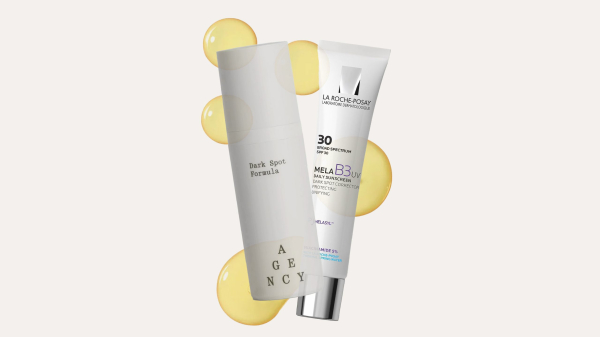
 Collage: Jemeria Davison; Source images: Courtesy of brandsSave this storySave this story
Melasma is one of the most common—and stubborn—forms of hyperpigmentation, which is why so many people are on the hunt for the best products for melasma. “Melasma is a pigmentary disorder that appears as lacy, reticulated brown patches,” says Corey L. Hartman, MD, a board-certified dermatologist in Birmingham, Alabama. These patchy brown spots tend to appear on the face (think: cheeks, upper lip, forehead), and while they’re completely normal and not harmful, it’s also understandable if you want to lighten the appearance of melasma, either with in-office treatments, skin-care products, or both.
Often triggered by heat, sun, hormonal changes (melasma is frequently referred to as the “pregnancy mask”), or inflammation, melasma tends to stick around unless you take action. “Even hot yoga or a long run outdoors can trigger a flare-up,” says Sarah Sung, MD, a board-certified dermatologist in Seattle. “I tell patients to treat melasma like a chronic condition that can relapse—but with the right plan, you can stay ahead of it.”
Top Products for Melasma
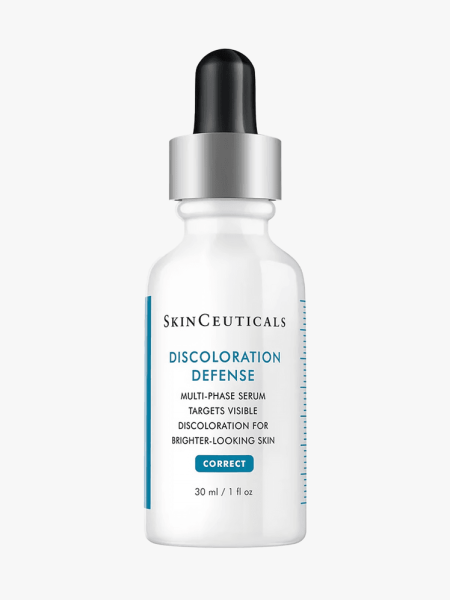
- Best Overall: SkinCeuticals Discoloration Defense, $115
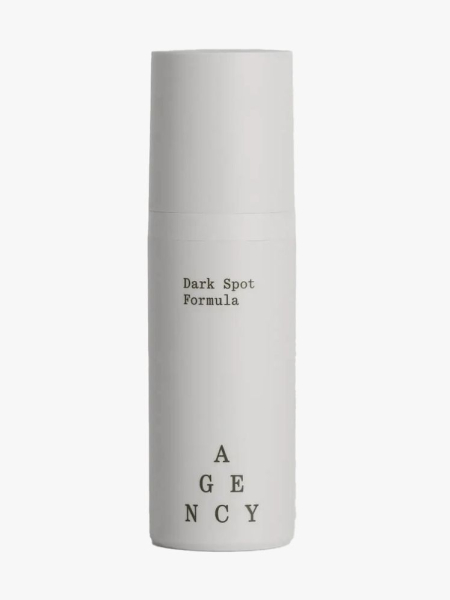
- Best for Customizable Formulas: Agency by Curology Dark Spot Formula, $35
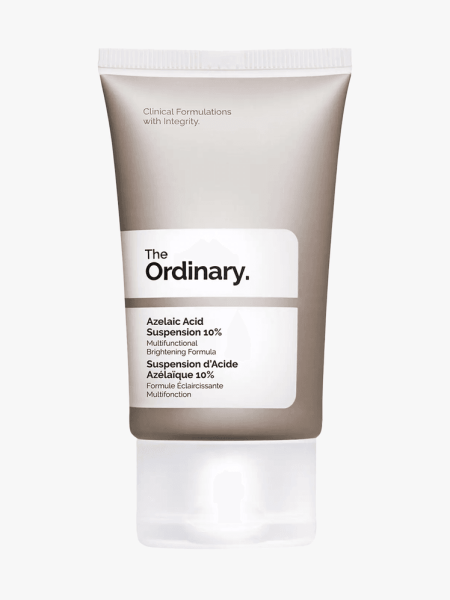
- Best for Post-Pregnancy: The Ordinary Azelaic Acid Suspension 10% Cream, $12
- Best with SPF: La Roche-Posay Mela B3 UV Face Sunscreen SPF 30, $35
The most effective routines tackle melasma on multiple fronts: fading pigment, calming inflammation, and gently exfoliating. And don’t forget broad-spectrum sunscreen: “While technically not a melasma treatment product, sunscreen is essential,” says Dr. Hartman. “Skin will likely be more susceptible to sun damage, which could create new melasma patches.” Ahead, the derm-approved products that do all that and more.
Frequently Asked QuestionsLargeChevron
- What is the most effective treatment for melasma?
- How do you get rid of melasma ASAP?
- Does melasma go away on its own?
- Meet the experts
- How we test and review products
- Our staff and testers
Best Overall: SkinCeuticals Discoloration Defense
 Save to wishlist
SkinCeuticals
Discoloration Defense
Skinceuticals
Dermstore
Bluemercury
Why it’s worth it: SkinCeuticals Discoloration Defense is consistently lauded as the best option for discoloration by dermatologists, and for good reason: This lightweight, easy-to-layer serum is as hardworking as a prescription formula for fading melasma and other stubborn discoloration. It’s powered by 3% tranexamic acid, 1% kojic acid, 5% niacinamide, and 5% HEPES (also known as sulfonic acid) to gently exfoliate and visibly brighten skin over time.
“Tranexamic acid and kojic acid are two active ingredients in the formula that target stubborn brown patches and inflammatory discoloration like melasma,” says Dr. Hartman, who adds that many of his patients have had success with this particular formula. Derms don’t just recommend this serum—they even use it themselves. “This is one of my favorite serums, and one that I use daily,” says Asmi Berry, DO, a board-certified dermatologist based in Los Angeles. “I love it as a non-hydroquinone option that works well for sensitive skin types.”
More to know
LargeChevron
- Key ingredients: tranexamic acid, kojic acid, niacinamide, sulfonic acid
- Fragrance-free: yes
Best for Customizable Formulas: Agency by Curology Dark Spot Formula
 Save to wishlist
Agency by Curology
Dark Spot Formula
Agency by Curology
Why it’s worth it: Agency by Curology Dark Spot Formula is a personalized, prescription-strength treatment designed to fade everything from melasma to post-breakout discoloration without you ever stepping foot in a dermatologist’s office. As with Musely, after submitting a quick skin quiz and a few selfies, you’re matched with a licensed provider who prescribes a custom blend of four active ingredients, like azelaic acid, kojic acid, hydrocortisone, and hydroquinone, that are tailored to your skin’s specific needs. The last ingredient is a heavy hitter when treating dark spots—it’s known for helping slow down melanin production to visibly fade discoloration over time. Your formula ships every two months, making this one of the easiest ways to even out skin tone with the blessing of a derm. Agency may or may not include hydroquinone in your Dark Spot Formula, but if it does, it’ll only be for a few months at a time. (To prevent overuse, the brand cycles you on and off automatically.)
More to know
LargeChevron
- Key ingredients: azelaic acid, kojic acid, hydrocortisone, hydroquinone
- Fragrance-free: yes
Best for Post-Pregnancy: The Ordinary Azelaic Acid Suspension 10% Cream
 Save to wishlist
The Ordinary
Azelaic Acid Suspension 10% Cream
Amazon
Nordstrom
Ulta Beauty
Why it’s worth it: If sensitive skin or hormonal shifts during pregnancy or postpartum have made potent brighteners a no-go, you’re in luck: The Ordinary’s Azelaic Acid Suspension 10% takes a gentler route to more even-looking skin. “Azelaic acid is one of my go-to ingredients when someone has melasma but can’t tolerate a super aggressive brightening routine like one with retinoids” says Mamina Turegano, MD, a board-certified dermatologist based in New Orleans. “Azelaic acid helps with excess pigment while also being anti-inflammatory, so I especially like it for someone who also deals with redness, acne, or easily irritated skin.”
Here, it comes at a 10% concentration—a common over-the-counter strength that’s effective enough to deliver noticeable benefits (prescription-level azelaic acid can go up to 20%, FYI). The cream-like, silicone base gives the formula a silky, smoothing feel, while vitamin E provides antioxidant benefits. Best of all, the streamlined formula is fragrance-free, making it an especially great pick for sensitive skin.
More to know
LargeChevron
- Key ingredients: 10% azelaic acid, silicones, vitamin E
- Fragrance-free: yes
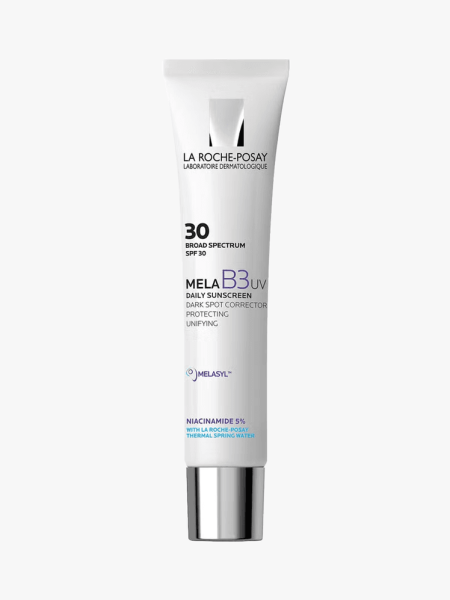
Best with SPF: La Roche-Posay Mela B3 UV Face Sunscreen SPF 30
 Save to wishlist
La Roche-Posay
Mela B3 UV Face Sunscreen SPF 30
Amazon
Dermstore
Ulta Beauty
Why it’s worth it: Melasma treatments and sun protection should go hand-in-hand, since UV exposure can deepen existing patches and make them harder to fade. La Roche-Posay’s Mela B3 UV Face Sunscreen SPF 30 tackles discoloration from both ends by helping protect against the sun while addressing existing dark spots. Its star pairing is niacinamide and proprietary Melasyl. Unlike traditional brighteners that work by inhibiting melanin production, Melasyl prevents certain melanin-related compounds from forming dark spots, “helping reduce hyperpigmentation while preserving your skin’s natural pigment,” says Dr. Turegano. She also likes that Melasyl and niacinamide target persistent skin discoloration without relying on hydroquinone. “It also has hydrating ingredients like glycerin and shea butter to keep skin soft,” making this daily SPF an easy way to work both prevention and correction into one step, says Dr. Turegano.
More to know
LargeChevron
- Key ingredients: Melasyl, niacinamide, shea butter, glycerin
- Fragrance-free: no
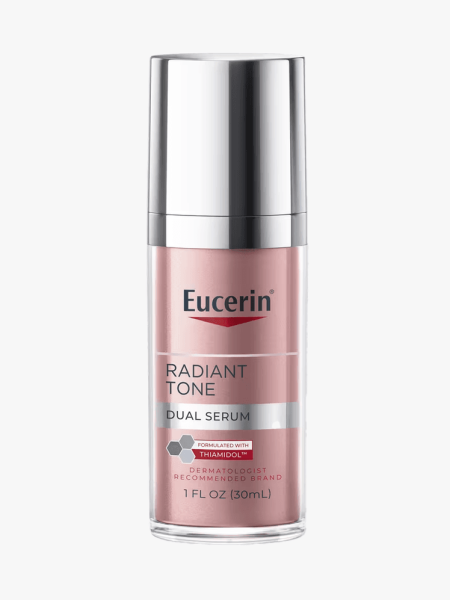
Best Drugstore: Eucerin Radiant Tone Dual Serum
 Save to wishlist
Eucerin
Radiant Tone Dual Serum
Amazon
Ulta Beauty
Why it’s worth it: Many pigment-correcting treatments, particularly those with hydroquinone or retinoids, can make skin more sensitive to the sun, making them trickier to use during the summer—or if you live in a warm, sunny climate year-round. To skirt that, Eucerin’s Radiant Tone Dual Serum star ingredient is its proprietary Thiamidol, a tyrosinase inhibitor that reduces the production of excess melanin that contributes to dark spots. “Thiamidol is a powerhouse lightening ingredient that, unlike hydroquinone, can be used long-term,” says New York City-based board-certified dermatologist Jocelyn Gandelman, MD.
It’s joined by sodium ascorbyl phosphate, a vitamin C derivative with antioxidant and brightening benefits, plus licorice root extract to further support a more even-looking complexion. With consistent use, the serum gradually fades the look of persistent discoloration while remaining surprisingly gentle on skin, says Dr. Gandelman.
More to know
LargeChevron
- Key ingredients: Thiamidol, sodium ascorbyl phosphate, licorice root extract
- Fragrance-free: yes
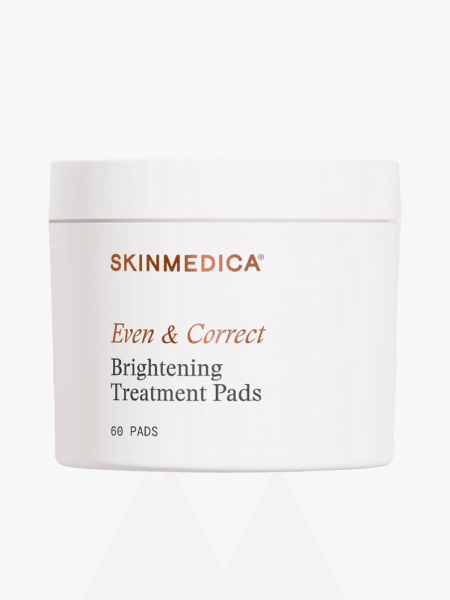
Best for Uneven Texture: SkinMedica Even & Correct Brightening Treatment Pads
 Save to wishlist
SkinMedica
Even & Correct Brightening Treatment Pads
Amazon
Dermstore
Bluemercury
Why it’s worth it: We love a good swipe-and-go moment with SkinMedica’s Even & Correct Brightening Treatment Pads. “These have been part of my personal morning skincare routine for years,” says Dr. Hartman. “I like how easy they are to use. Grab a pad and gently rub it all over your face after cleansing.” Each pad is infused with 10% glycolic acid for gentle exfoliation, tranexamic acid to target dark spots, and niacinamide to smooth and even tone. That subtle zing you feel when using these pads? That’s the witch hazel at work—a natural, alcohol-free astringent that helps tone down redness, calm blotchiness, and leave your skin looking more even and refreshed. Still, “they’re gentle enough for daily use and great for maintaining clear skin,” says Saami Khalifian, MD, a board-certified dermatologist in San Diego, California, who considers them the perfect follow-up for in-office treatments.
More to know
LargeChevron
- Key ingredients: LTN complex, glycolic acid, witch hazel
- Fragrance-free: yes
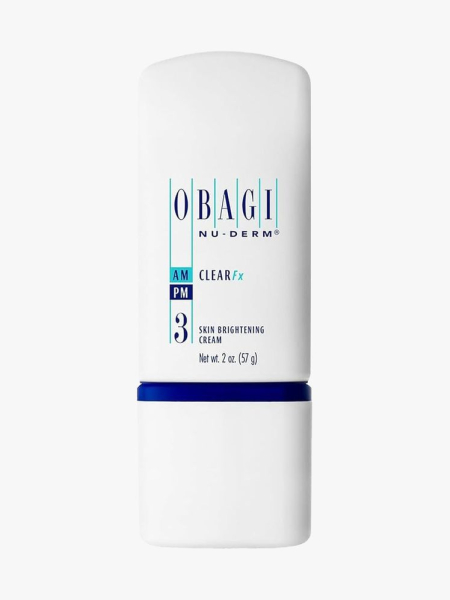
Best for Sensitive Skin: Obagi Nu-Derm Clear Fx
 Save to wishlist
Obagi
Nu-Derm Clear Fx
Amazon
Dermstore
Bluemercury
Why it’s worth it: Obagi Nu-Derm Clear Fx is a gentle yet effective brightening cream that targets dark spots, uneven tone, and signs of sun damage. “For those who prefer non-prescription but want results close to an Rx, this brightening cream uses arbutin and antioxidants in a creamy base,” says Dr. Sung. Arbutin is a naturally derived ingredient that’s gentler than hydroquinone—it helps fade dark spots by blocking the enzyme that encourages melanin production in your skin. “It’s ideal for nighttime use and pairs beautifully with a prescription retinoid, making it a smart addition to your evening routine.” With consistent use, you’ll see brighter, more even-toned skin—delivering results that come impressively close to prescription strength.
More to know
LargeChevron
- Key ingredients: arbutin, lactic acid
- Fragrance-free: yes
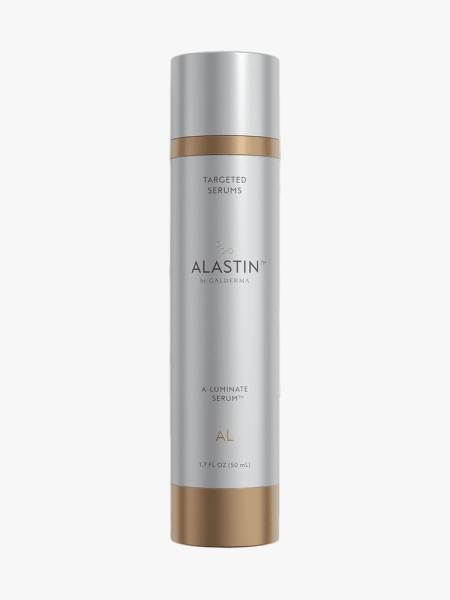
Best for Mature Skin: Alastin Skincare A-Luminate Face Serum
 Save to wishlist
Alastin Skincare
A-Luminate Face Serum
Amazon
Why it’s worth it: If you're looking for a product that not only helps fade melasma but also boosts your overall glow, Alastin Skincare A-Luminate Face Serum is worth a spot in your routine. “This is a newer addition to my practice, but it’s quickly becoming a patient favorite for treating pigmentation,” says Dr. Khalifian. “It’s packed with antioxidants and niacinamide, goes on smoothly, and doesn’t cause the irritation we sometimes see with more aggressive formulas.” The formula is anything but basic—it spotlights the brand’s proprietary PATH-3 Technology to help reduce the recurrence of surface pigmentation, plus tranexamic acid. Tranexamic acid blocks the signal between melanocytes (the cells that create pigment) and keratinocytes (the ones that tell them to get to work after sun exposure or inflammation) to target existing discoloration and improve skin tone over time.
More to know
LargeChevron
- Key ingredients: path-3 technology, tranexamic acid, niacinamide
- Fragrance-free: yes
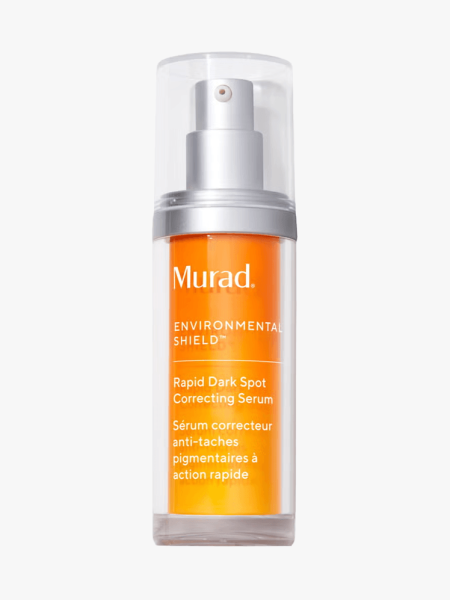
Best Fast-Acting: Murad Rapid Dark Spot Correcting Serum
 Save to wishlist
Murad
Rapid Dark Spot Correcting Serum
Amazon
Dermstore
Ulta Beauty
Why it’s worth it: If speedy results are your vibe (and whose aren’t?), Murad Rapid Dark Spot Correcting Serum is worth the shot. This hydroquinone-free formula handles melasma, post-acne marks, and sun spots with a team of resorcinol, tranexamic acid, and glycolic acid. “It’s one of the more aggressive over-the-counter pigment correctors that still plays nice with sensitive skin,” says Dr. Sung. Together, these ingredients exfoliate, accelerate cell turnover to fade discoloration, and significantly brighten skin—fast. We’re talking visible results in just two weeks, which is pretty impressive for something for which you don’t need a prescription.
More to know
LargeChevron
- Key ingredients: resorcinol, tranexamic acid, glycolic acid
- Fragrance-free: no
Frequently Asked Questions
What is the most effective treatment for melasma?
When it comes to treating melasma, there’s no one-size-fits-all approach. “Melasma is one of the most frustrating pigment conditions to treat because it isn’t just a skin-deep issue—it’s hormonally and heat-sensitive, and easily re-triggered,” says Dr. Sung. That’s why she emphasizes a thoughtful, layered strategy that uses different approaches. “A thoughtful layering of microneedling, a topical lightening agent, and antioxidant-rich aftercare helps the speed and sustainability of results,” she says. Oral tranexamic acid (delivered as a pill) is also an effective option for many.
While laser therapy can help this skin condition in some cases, she notes that many laser or light devices (including red light therapy masks) can make melasma worse. “Microneedling can be excellent, especially when paired with PRP [platelet-rich plasma, which uses the patient’s own blood to boost healing, calm inflammation, and enhance results],” she says. “Chemical peels can work but must be carefully selected to avoid rebound pigmentation—I typically introduce peels later in the treatment plan, once the skin barrier is strong and daily SPF is a habit.”
How do you get rid of melasma ASAP?
There’s no one-step solution for melasma, but targeting it from multiple angles can deliver faster results. “The fastest results come when we approach melasma on four fronts: suppress melanocytes, exfoliate pigment, reduce inflammation, and block UV/heat triggers,” says Dr. Khalifian. That might look like a tailored routine of prescription topicals, gentle exfoliants, antioxidants, and consistent sunscreen use with SPF 30 or higher.
Does melasma go away on its own?
Melasma usually doesn’t go away on its own, and it can get worse without treatment. “At best, it may fade seasonally. At worst, it can deepen and spread, especially with sun, heat, or hormonal triggers,” says Dr. Khalifian. That’s why early intervention and long-term maintenance are key. While it won’t go away for good, melasma “can go into remission with diligent maintenance and symptom management,” she explains. Once visible pigment fades, Dr. Khalifian recommends shifting to a plan that includes “antioxidants, light peels, and occasional laser touch-ups—more about control than cure, similar to how you’d manage acne or rosacea,” he says.
Meet the experts
- Asmi Berry, DO, FAAD, a board-certified dermatologist based in Los Angeles
- Jocelyn Gandelman, MD, a board-certified dermatologist at Schweiger Dermatology based in New York City
- Corey L. Hartman, MD, a board-certified dermatologist and founder of Skin Wellness Dermatology based in Birmingham, AL
- Saami Khalifian, MD, a board-certified dermatologist and founder of SOM Aesthetics in San Diego, CA
- Sarah Sung, MD, FAAD, a board-certified dermatologist of The Perq based in Seattle
How we test and review products
When Allure tests a product, our editors look at it from every angle in an effort to best serve you. We review ingredients, scrutinize brand claims, and, when necessary, examine peer-reviewed scientific and medical studies. In addition to testing each and every product that's included in each and every review, we rely on experts who shape their fields, including dermatology, cosmetic chemistry, and medicine, to help us vet the ingredients and formulas.
For our list of the best products for melasma, we considered each product's performance across five primary categories: product ingredients and efficacy, packaging, fragrance, texture, and product wear. Every product was determined to have excelled in each category by our editorial team, which is composed of in-house writers and editors as well as contributors—along with special consideration from dermatologists. To learn more information on our reporting and testing processes, read our complete reviews process and methodology page.
Our staff and testers
A beauty product is a personal purchase. You might be searching for a face cream to address persistent dryness or a new nail product to add to your Sunday self-care routine; you may simply be browsing around for the latest launches to hit the hair market. No matter what you seek or your individual needs and concerns, Allure wants to ensure that you love anything we recommend in our stories. We believe that having a diverse team of writers and editors—in addition to the wide range of outside testers and industry experts we regularly call upon—is essential to reaching that goal.
After all, can we really say a skin-care product is the "best" for people over 50 if the only testers we've solicited opinions from folks who have yet to hit 30? Can we honestly deem a high-end diffuser worthy of your hard-earned cash if it's never been tested on curls? We're proud that our staff spans a wide range of ages, skin tones, hair textures, genders, and backgrounds, which means that we are able to fairly assess any beauty product that comes into the beauty closet.
Leave a Reply